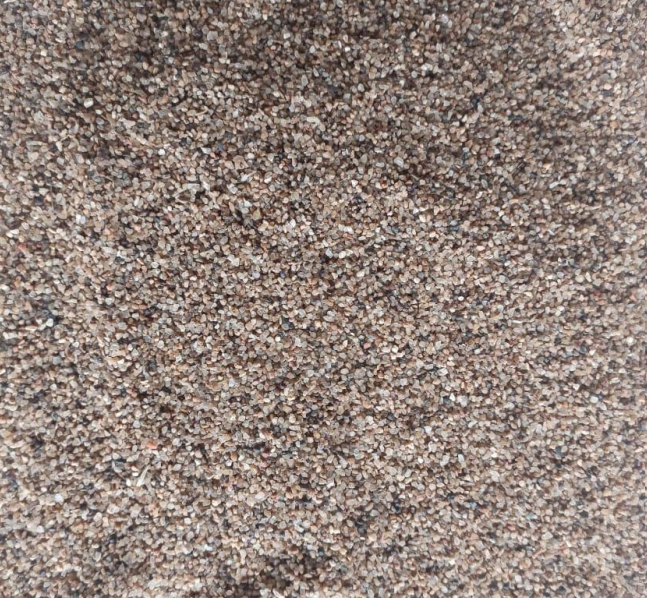
Most filter under-performance complaints trace back to one decision made early and never revisited: the media grade. A filter sized correctly on paper can still under-perform if the sand or gravel inside it doesn't match the flow rate and turbidity it's expected to handle.
Start with effective size, not just "fine" or "coarse"
Effective size (E10) is the sieve opening through which 10% of the media sample passes by weight. It's a more useful number than a vague size range because it tells you how the finest fraction of your media will behave — that fraction usually determines head-loss and how often you'll need to backwash.
- Smaller effective size: better particulate capture, higher head-loss, more frequent backwash
- Larger effective size: longer filter runs, coarser polishing, lower head-loss
Check the uniformity coefficient
Uniformity coefficient (UC) compares the sieve size passing 60% of the sample to the effective size. A UC closer to 1 means grains are more evenly sized, which reduces stratification during backwash and keeps the bed performing consistently layer to layer. Most water filtration applications look for a UC below 1.7.
Match bed depth to grain size
A bed that's too shallow for its grain size lets particles punch straight through; a bed that's unnecessarily deep just adds head-loss and cost. As a rough starting point:
- 0.4–0.8 mm filtering sand: typically used in 600–750 mm bed depths for polishing applications
- 0.8–1.2 mm filtering sand: standard rapid sand filters, 700–900 mm bed depth
- Support gravel layers (4–32 mm): sized upward from the sand to prevent media loss into underdrains
Don't skip the support layer
It's common to specify the sand grade carefully and treat the gravel underneath as an afterthought. But if the support gravel gradation doesn't step correctly from the sand size, fine media migrates into the underdrain over time, and the filter's performance degrades even though the "correct" sand was installed.
When in doubt, test before you order
A sieve analysis report costs nothing to request and tells you exactly what's in the bag before it reaches your site. If you're unsure which combination fits your vessel, share your flow rate, vessel diameter and target water quality with our technical team and we'll recommend a grade combination.