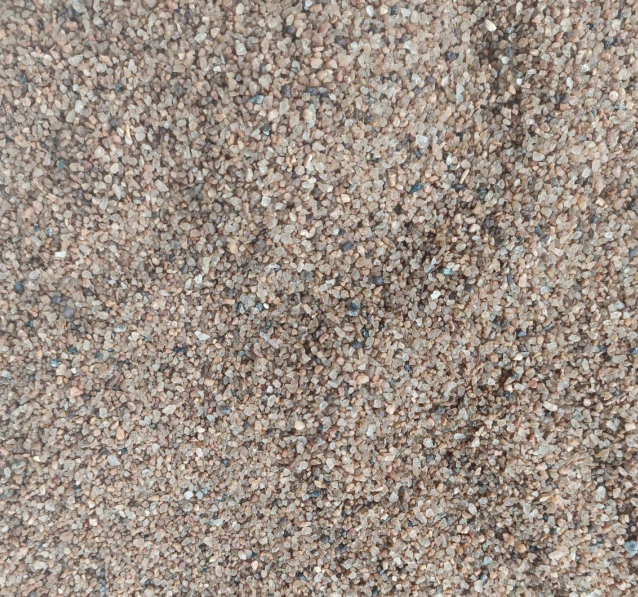
"Just send sand" is a request we hear often, but filtering sand and quartz silica sand aren't interchangeable in every application. They're processed from similar raw material, yet the grading, purity control and end-use differ enough to matter.
Mineral purity is the first difference
Filtering sand is graded primarily for particle size and low fines content, aimed at removing suspended solids and turbidity. Quartz silica sand goes through tighter control on silicon dioxide (SiO₂) content, iron content and acid solubility — important where the media sits ahead of membranes or resin beds that are sensitive to mineral contamination.
Where filtering sand is the right call
- Municipal and general industrial rapid sand filters
- Turbidity and suspended-solids removal where mineral purity isn't process-critical
- Swimming pool filtration, where cost-efficiency matters more than SiO₂ purity
Where quartz silica sand earns its place
- Pre-treatment ahead of RO membranes, where fouling from iron or clay content is a real risk
- Demineralisation (DM) plant pre-filters and softener beds
- Process water polishing in industries sensitive to mineral carryover
Hardness and durability
Quartz silica sand's higher purity generally also means a harder, more angular-free grain structure, which resists attrition better over repeated backwash cycles — useful in systems that backwash frequently or run at higher flow rates.
How to decide which one you need
If your filter sits directly ahead of an RO membrane, softener resin, or any equipment sensitive to mineral fouling, quartz silica sand is worth the marginal cost difference. If you're filtering for turbidity and suspended solids only, standard filtering sand does the job efficiently.